
Settlement Agent Fees in WA: What You’ll Pay Depending on Your Situation (2026)
Settlement agent fees for buyers in WA are quoted as a fixed professional fee for a standard residential purchase, but that’s only the professional fee. Statutory charges sit on top: transfer duty, Landgate title search and registration fees, and PEXA platform fees. Those components are itemised separately in every quote.
The full amount you pay depends on your transaction type, not just the property value. A standard purchase, a first home buyer purchase, a deceased estate, and a trust purchase each attract a different fee. This guide covers what to expect across nine common scenarios.
For a current price guide and instant quote, see our settlement agent fees page.
Standard Purchase: Owner-Occupier or Investor
There are three components that make up settlement agent fees for a buyer in WA: a professional service fee, admin and sundry costs, and statutory charges. Statutory charges (including Landgate title search and registration fees, transfer duty, and PEXA platform fees) are government and third-party costs passed through at cost. They’re the same regardless of which settlement agent you use. The professional service fee and sundry costs vary between agents and are the figures to compare when getting quotes.
At Strategic Settlements, the professional fee for a standard purchase is fixed and quoted upfront, with statutory charges itemised separately in your quote.
The statutory charges are often the bigger number. Transfer duty alone on a Perth property can run into tens of thousands of dollars. It’s a State Government charge your settlement agent lodges on your behalf, not part of their fee. What your agent controls is the professional and sundry component.
Buying as an investor? The fee structure is the same. But capital gains tax implications of an investment property purchase should be discussed with a qualified tax professional. Settlement agents can’t provide tax advice.
Standard Sale: What Sellers Pay
Sellers in Western Australia engage their own settlement agent separately from the buyer’s agent. Each side pays their own fee. The two agents coordinate the settlement but represent their respective clients independently.
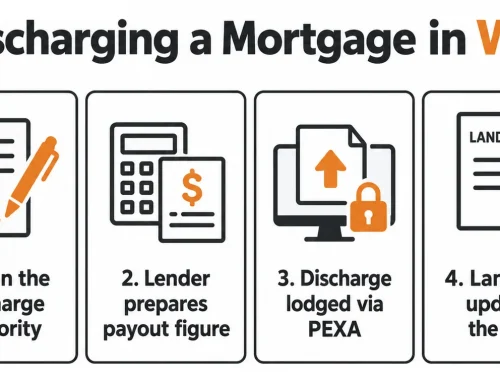
The seller’s statutory charges differ from the buyer’s. Sellers don’t pay transfer duty, but they typically pay for mortgage discharge registration with Landgate (if there’s an existing mortgage), title searches, PEXA fees, and rate adjustments with local authorities. The professional service fee for a standard sale is similar in range to a purchase.
At Strategic Settlements, the professional fee for sellers is fixed and quoted upfront, with all components itemised in your quote upfront.
One thing that catches people out: some sellers assume settlement agent fees come out of the buyer’s funds. They don’t. Each party pays their own agent from their respective side of the transaction.
First Home Buyer Settlements: Grant Coordination and What Changes
For first home buyers in Western Australia, the settlement agent fees are the same as for a standard purchase. There’s no additional charge for coordinating the First Home Owner Grant (FHOG). Your settlement agent applies for the $10,000 FHOG on your behalf with the WA Office of State Revenue. For completed new homes and off-the-plan purchases, the grant is typically applied as a credit at settlement, reducing the amount you need to contribute on settlement day. For house-and-land packages involving a construction loan, the timing differs – your lender and settlement agent will confirm when it applies. Your agent also lodges the First Home Owner Rate of Duty (FHOR) concession claim on your behalf. Eligibility for both is assessed by the Office of State Revenue, not the settlement agent.
Where a full duty exemption applies under the FHOR (for properties below the duty-free threshold), transfer duty is nil. This reduces the statutory charges component of your quote compared to a standard purchase above the threshold.
Current FHOR thresholds are set by the WA Office of State Revenue and updated periodically. Verify current figures at osr.wa.gov.au before relying on them. Thresholds were updated in the 2026-27 WA Budget, with new amounts expected from around 28 July 2026 pending legislation.
Your settlement agent can’t determine whether you qualify for the FHOG or FHOR. That assessment is made by the Office of State Revenue.
Refinancing: Settlement Fees Without a Property Transfer
In most cases, refinancing a home loan in Western Australia requires a settlement agent, even though no property is changing hands. Lenders require one to coordinate the discharge of the existing mortgage and the registration of the new lender’s mortgage with Landgate. Because there’s no transfer of title and no transfer duty involved, settlement agent fees for a refinancing are generally lower than for a property purchase.
The scope is narrower: no transfer documents, no transfer duty lodgement, no buyer-side statutory charges. The main costs are the professional fee, PEXA platform fees (used for most WA refinancing settlements), and Landgate mortgage registration fees.
Confirm the specific fee with your settlement agent at the quoting stage, as refinancing fees vary depending on complexity. If there are existing caveats (registered claims on the title that need to be removed before the new mortgage can be registered) or multiple lenders involved, that adds steps and cost.
A settlement agent can’t advise on whether refinancing is the right financial decision for your situation. A mortgage broker or financial adviser is the right person for that conversation. Strategic Mortgages Perth specialises in refinancing for WA homeowners.
Deceased Estate Settlements: What Changes and Why
Settling a property from a deceased estate in Western Australia involves additional steps compared to a standard transaction. Before a settlement agent can proceed, the estate must have probate (the court process that validates a will) or Letters of Administration (the court order that appoints someone to manage an estate when there’s no valid will) in place. Both are legal processes handled by a solicitor, not a settlement agent. Once those legal requirements are satisfied, the settlement agent handles the property transfer, including preparing and lodging the relevant Landgate documents.
Fees for deceased estate settlements are higher than for standard residential transactions. The additional documentation and coordination involved are the reason. Your settlement agent should flag the expected fee clearly at the quoting stage.
Capital gains tax may apply on property from a deceased estate, depending on the circumstances of the transfer. CGT implications should be discussed with a qualified tax professional. Settlement agents can’t provide tax advice. For guidance on the sale process itself, see our article on selling a deceased estate property in Perth.
Settlement agents can’t advise on probate, Letters of Administration, estate law, or the entitlements of beneficiaries. A solicitor is required for those matters.
Family Transfers and Spousal Transfers
Transferring property to a family member or spouse in Western Australia follows the same Landgate registration process as a standard sale. The settlement agent prepares and lodges the Transfer of Land document. Unlike a standard purchase, there’s usually no real estate agent involved and no price set through open competition between buyers. Transfer duty may still apply depending on the relationship between the parties and the nature of the transfer. Spousal and de facto transfers may qualify for a duty concession or exemption in some circumstances; eligibility is determined by the WA Office of State Revenue.
Where no mortgage is involved in the transfer, there’s no lender coordination required. This can bring the fee below that of a standard purchase or sale. If either the person transferring the property or the person receiving it has a mortgage, lender involvement adds steps and cost.
Capital gains tax may apply to property transfers between family members, depending on the circumstances. CGT implications should be discussed with a qualified tax professional before the transfer proceeds. Settlement agents can’t advise on duty concession eligibility or the tax implications of property transfers. See also our guide on transferring property to a family member in WA.
Off-the-Plan Settlements
Off-the-plan settlements in Western Australia have a different fee profile to standard residential settlements. Settlement can’t proceed until Landgate has issued the certificate of title, which requires construction to be complete and, for strata properties, the strata plan to be registered. The settlement agent performs additional title confirmation steps not required in standard transactions, including monitoring title registration milestones and coordinating with the developer’s settlement agent over an extended period.
The WA off-the-plan transfer duty concession reduces the value used to calculate transfer duty, based on the proportion of unimproved land value. The calculation method is set by the WA Office of State Revenue. Verify the current basis at osr.wa.gov.au, as this can change. Eligibility is determined by the Office of State Revenue, not the settlement agent.
Capital gains tax implications of an off-the-plan investment should be discussed with a qualified tax professional. Settlement agents can’t advise on duty concession eligibility or on sunset clause rights (clauses in the contract that allow a developer to cancel if construction isn’t completed by a set date). Those are matters for the Office of State Revenue and a solicitor respectively.
Trusts, SMSFs, and Corporate Buyers
Purchases made through a trust, self-managed superannuation fund (SMSF), or company require additional documentation compared to a standard individual purchase. The settlement agent needs to verify trustee authorisation, company documentation, or SMSF trustee details before the Transfer of Land can be lodged with Landgate. These requirements add complexity and are reflected in the fee.
If you’re buying through a trust, SMSF, or company, disclose the entity structure at the quoting stage. A quote prepared for a standard individual purchase won’t cover the additional work involved in a trust or corporate transaction.
Settlement agents can’t advise on the legal or tax structure of the entity, on whether a particular structure is appropriate for your purchase, or on SMSF compliance requirements. A solicitor and a qualified tax professional should be engaged for those matters before the purchase proceeds.
Strata Properties and Properties with Special Conditions
Strata property settlements in Western Australia require a strata company levy certificate (previously known as a Section 43 certificate, now issued under Section 110 of the Strata Titles Act 2018), which confirms the property’s standing with the strata company in relation to any outstanding levies or special contributions. It’s an additional statutory cost that applies to strata purchases and sales but isn’t required for standard freehold title transactions. Your settlement agent obtains this certificate as part of the settlement preparation.
Properties with non-standard contract conditions (unusual possession arrangements, simultaneous sale and purchase dependencies, build contracts attached to a land purchase, or significant special conditions) involve additional coordination from the settlement agent and may attract a higher professional fee. Disclose these to your settlement agent at the quoting stage, not after you’ve engaged them.
If your property has a caveat or other encumbrance (a registered claim or restriction on the title, such as an unpaid rates debt, an easement, or a caveat lodged by a third party) that needs to be resolved before settlement, that adds complexity and cost. Your settlement agent will identify these through the title search process.
How Settlement Agent Fees Are Regulated in WA
Before February 2016, settlement agent fees in Western Australia were set by a regulated scale. Fee regulation has since been removed, so agents can set their own prices. But the disclosure requirements remain.
Under current rules, Western Australian settlement agents must provide a written cost disclosure before any agreement is entered into. This disclosure must state the maximum amount you’ll be charged. Any increase after the agreement starts requires written notification before the additional charge is applied.
What this means in practice: you have the right to a clear written quote before you commit. Your settlement agent can’t increase their fee without telling you in writing first. If a quote is verbal or vague, ask for it in writing before you sign anything.
Ready to get a quote for your transaction?Use our instant online quote tool to see fees for your specific situation, or get in touch with our team if your situation is more complex.
Frequently Asked Questions
Do buyers and sellers both pay settlement agent fees in WA?
Yes. In Western Australia, buyers and sellers each engage their own settlement agent and pay their own agent’s fee separately. The two agents work together to coordinate the settlement but represent their respective clients independently. There’s no shared fee between the two sides.
Are settlement agent fees higher for more complex transactions?
Yes. Standard residential purchases and sales carry the base professional fee. Deceased estates, trusts, SMSFs, off-the-plan purchases, and properties involving caveats, special conditions, or simultaneous settlements typically attract additional charges. Your settlement agent should disclose these upfront when you provide the transaction details at quoting stage.
Do I pay settlement agent fees if settlement falls through?
This depends on how much work has been completed and the specific terms of your cost disclosure agreement. Some preliminary work (title searches, document preparation, lender correspondence) may already have been done and may be billed. Review your cost disclosure carefully before engaging a settlement agent, and ask what charges apply if settlement doesn’t proceed.
Are settlement agent fees the same for refinancing as for a purchase?
No. Refinancing fees are generally lower because there’s no transfer of title and no transfer duty. The settlement agent’s scope is narrower: coordinating the mortgage discharge and new mortgage registration with Landgate, rather than managing a full property transfer. The exact cost depends on the complexity of the refinancing. Confirm the fee with your settlement agent at the quoting stage.
Can a settlement agent advise on which entity structure to use when buying property?
No. Settlement agents handle the transfer of property. They can’t advise on trust structures, SMSF compliance, or corporate law. If you’re considering purchasing through a trust, SMSF, or company, engage a solicitor and qualified tax professional before you make an offer, not after you’ve exchanged contracts.
Need a quote for your specific transaction? Use our instant online quote tool, or get in touch with our team if your situation is more complex.
The information in this article is general in nature and does not constitute legal, tax, or financial advice. Strategic Settlements is a licensed settlement agent and cannot provide legal advice. Individual circumstances vary. We recommend consulting a qualified professional – including a solicitor, tax adviser, or the WA Office of State Revenue – before making property decisions.